
Introduction To The Bulgarian Cyrillic Alphabet
Author
The first challenge you’ll have learning Bulgarian is the alphabet.
It looks strange. It looks “Russian” (we will get to that in a moment). It looks difficult.
But I have good news for you.
The Bulgarian alphabet is actually very easy to learn.
Unlike English, where the letter “A” sounds different in “Apple”, “Car”, and “Dave”, Bulgarian is almost entirely phonetic.
This means that once you learn the sound a letter makes, it makes that sound 99% of the time.
You read exactly what you see.
In this guide, I’ll walk you through the 30 letters of the Bulgarian alphabet so you can start reading immediately.
But first, we need to clear up a common misconception.
Many people call this the “Russian alphabet”. As a proud Bulgarian, I have to correct this!
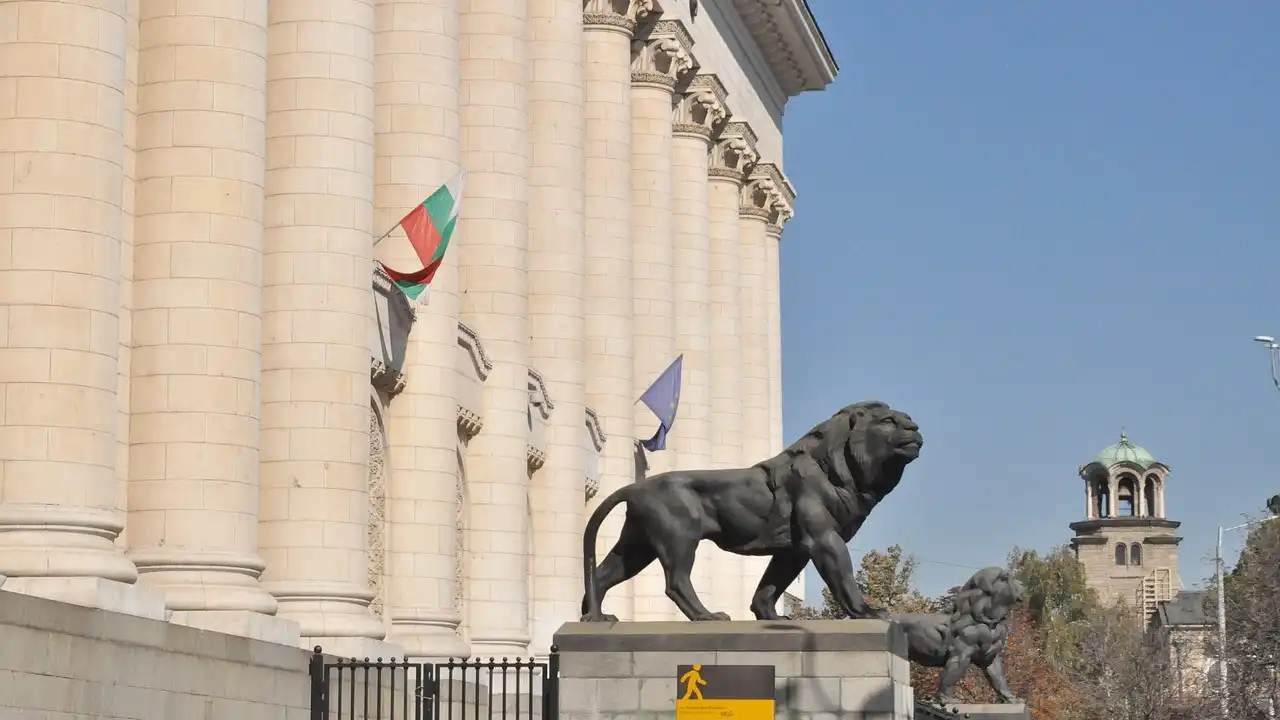
The Cyrillic script was developed in the First Bulgarian Empire (at the Preslav Literary School) during the 9th century. It was then spread to Russia and other Slavic nations.
So, when you learn these letters, you aren’t just learning a script - you’re learning a piece of Bulgarian history.
Table of Contents:
The 30 letters of the Bulgarian alphabet
The Bulgarian alphabet (azbuka) has 30 letters.
Some look exactly like English letters. Some look completely different. And a few look like English letters but sound completely different (these are the tricky ones!).
Here is the complete chart to help you get started.
| Letter (Upper/Lower) | Name | Approximate English Sound |
|---|---|---|
| А а | A | Like a in “father” |
| Б б | Buh | Like b in “boy” |
| В в | Vuh | Like v in “van” |
| Г г | Guh | Like g in “go” |
| Д д | Duh | Like d in “dog” |
| Е е | Eh | Like e in “bed” |
| Ж ж | Zhe | Like s in “pleasure” or “vision” |
| З з | Zuh | Like z in “zoo” |
| И и | Ee | Like ee in “see” |
| Й й | Ee kratko | Like y in “boy” or “yoghurt” |
| К к | Kuh | Like k in “kite” |
| Л л | Luh | Like l in “lamp” |
| М м | Muh | Like m in “mom” |
| Н н | Nuh | Like n in “no” |
| О о | O | Like o in “hot” (short sound) |
| П п | Puh | Like p in “pot” |
| Р р | Ruh | Rolled r (like in Spanish) |
| С с | Suh | Like s in “sun” |
| Т т | Tuh | Like t in “top” |
| У у | Oo | Like oo in “boot” |
| Ф ф | Fuh | Like f in “father” |
| Х х | Huh | Like h in “hot” (but stronger, like ‘loch’) |
| Ц ц | Tsuh | Like ts in “cats” |
| Ч ч | Chuh | Like ch in “cheese” |
| Ш ш | Shuh | Like sh in “shoe” |
| Щ щ | Shtuh | Like sht in “fresh tea” |
| Ъ ъ | Er Golyam | Like u in “turn” or “under” |
| Ь ь | Er Maluk | Modifies the consonant before it (makes it soft) |
| Ю ю | Yu | Like you in “youth” |
| Я я | Ya | Like ya in “yard” |
False friends: letters that look like English but aren’t
The hardest part about learning the alphabet is overcoming your muscle memory.
There are six letters that are “False Friends”. They look like Latin (English) letters, but they make completely different sounds.
Watch out for these:
- В is not a B. It sounds like V (Video).
- Н is not an H. It sounds like N (No).
- Р is not a P. It sounds like R (Radio).
- С is not a C. It sounds like S (Snake).
- Х is not an X. It sounds like H (Hello).
- У is not a Y. It sounds like oo (Moon).
When I first started teaching foreigners, I noticed they would often try to read the word for “Restaurant” (Ресторант) as “Pectopant”.
Don’t be a “Pectopant” person!
Ресторант
The unique Bulgarian sounds
Now that we have covered the basics, let’s look at the letters that give Bulgarian its unique flavor. These are the shapes you probably haven’t seen before.
Ж (Zh): This looks like a bug or a spider. It sounds like the “s” in “measure” or “pleasure”.
Ц (Ts): This sounds like the end of the word “cats” or “pizza”. It is sharp and quick.
Ч (Ch): This looks like the number 4. It sounds like “ch” in “Charlie”.
Ш (Sh): This looks like a trident. It sounds like “sh” in “shoe”.
Щ (Sht): This is the letter Ш with a little tail. In Russian, this is a soft “sh” sound, but in Bulgarian, it is a hard combination of SH and T. It sounds like the middle of the phrase “fresh tea”.
Дъщеря
Ю (Yu): Sounds like the English word “you”.
Я (Ya): This is a backwards R. It sounds like “Ya”.
The tricky vowel: Ъ
I have saved the most famous Bulgarian letter for its own section.
Ъ (Er Golyam)
This letter confuses almost everyone because it has no direct equivalent in the alphabet of other languages, though the sound exists in English.
It is often transliterated as ‘A’, ‘U’, or ‘Y’, which can be confusing.
The sound is a deep throat sound, exactly like the ‘u’ in the English words turn, burn, or under. It is sometimes called a “schwa” sound.
The most famous word with this letter is, of course, the name of the country:
България
Notice that the first letter is Б (B), followed immediately by Ъ. It is not “Boolgaria” or “Balgaria”. It is “Buh-lgaria”.
A note on handwriting and italics
Here is a pro tip that will save you a lot of confusion later.
In Bulgaria, when we type on computers or phones, we usually use the standard block letters I showed you in the table above.
However, if you see a shop sign, a menu in a nice restaurant, or someone’s handwriting, the letters might look different. This is called “Bulgarian Cyrillic Italics”.
Some letters completely change shape in italics:
- г (g) looks like a backwards s or a z.
- д (d) looks like a handwritten g.
- т (t) looks like a handwritten m.
- и (i) looks like a handwritten u.
It can be very confusing to see a word like град (city) written in italics because it looks entirely different.
For now, focus on the standard block letters. But keep in the back of your mind that if you see a sign that you can’t read, it might just be the font style.